
Reinventing the Camera Club: Making Photography Communities Relevant for Today
By Keith Burton
🎧 Listen to the Podcast Version - CLICK HERE
I’ve also explored these ideas in a companion podcast, where AI-generated voices bring the discussion to life in a conversational format. It’s a slightly different take on the same themes—perfect if you prefer listening over reading.

During the pandemic, I had the opportunity to work closely with my local camera club, helping guide a rapid shift toward digital engagement and sharing. What started as a necessity quickly became something more powerful: a chance to make the club more accessible, more inclusive, and ultimately more relevant to a wider audience.
For a while, it worked.
People who had never been able to attend before—due to health, mobility, distance, or personal circumstances—suddenly had a seat at the table. Engagement improved. New voices joined. The club felt… alive in a different way.
But now, as in-person meetings return, much of that progress risks being undone.
And that raises an important question:
Are camera clubs in danger of slipping backwards?
The Problem with “Going Back to Normal”
There’s a natural pull toward the familiar—weekly meetings, printed handouts, and face-to-face talks. But an offline-first approach comes with real limitations.
It can alienate younger, 'digitally native' photographers who expect flexibility and immediacy
It can exclude those unable to attend physically
It can unintentionally create barriers that reduce diversity and inclusivity
At the same time, not everyone finds technology easy or appealing. Some members value human connection above all else and may feel disconnected by digital-only experiences.
So this isn’t about choosing digital vs in-person.
It’s about balance.
The Sweet Spot: Choice + Simplicity
From my experience, the most inclusive approach is surprisingly straightforward:
Offer multiple ways to engage (online, in-person, phone)
Keep technology simple and intuitive
Don’t assume prior knowledge
Provide human support when needed
Use tech to enhance, not replace, community
When clubs get this right, something powerful happens:people don’t feel forced into a system—they feel welcomed into a community.
What a Modern Camera Club Can Look Like
A forward-thinking club doesn’t abandon tradition—it builds on it.

Hybrid Meetings That Actually Work
Platforms like Zoom, Microsoft Teams, or Google Meet remain essential. They allow members to join from anywhere, whether that’s across town or across the country.
Add in features like:
Live captions for accessibility
Screen sharing for high-quality image viewing
Interactive polls and breakout discussions
And suddenly, meetings become more engaging—not less.
Smarter Websites, Not Just Static Pages
A modern club website shouldn't just inform—it should support.
Imagine:
A searchable knowledge base
Easy access to tutorials and guides
FAQs that actually help members solve problems
This kind of structure builds confidence and encourages learning at every level.
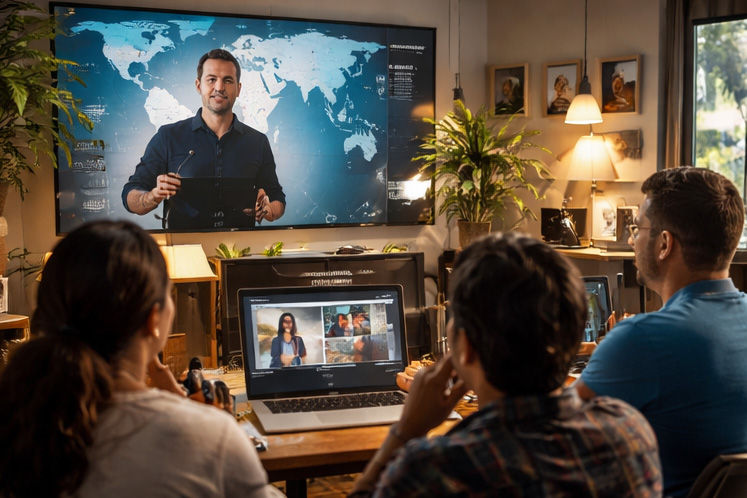
More Engaging, Flexible Programmes
Technology opens doors that traditional clubs simply couldn’t:
Guest speakers from around the world
Recorded talks and demos available anytime on any device, desktop or mobile.
Exploration of modern topics like mobile photography and AI
Personalised learning pathways based on member interests
It also allows for ongoing conversation—through messaging platforms or member portals—keeping the club alive between meetings.
Why This Matters More Than Ever

Camera clubs are competing—not just with each other—but with:
YouTube tutorials
Online communities
Social media platforms
On-demand learning
If clubs remain rigid, they risk becoming irrelevant.
If they evolve, they can become something far more valuable:
A true community that blends learning, creativity, and connection—on every member’s terms.
Inclusivity Isn’t Optional
One of the most important lessons from this journey is that inclusivity isn’t just about age or technology.
You might find:
A 70-year-old confidently using Lightroom every day
A 25-year-old avoiding anything technical
The real challenge is designing a club that works for everyone.
Because if it doesn’t?
It risks becoming closed, exclusive, and ultimately unsustainable.
A Final Thought
We no longer live in a world where all members are willing—or able—to travel on cold, dark evenings just to participate in a hobby.
And they shouldn’t have to.

The digital transformation that reshaped the workplace has also reshaped expectations for leisure and community.
Camera clubs can either:
Embrace that change and thrive
Or resist it—and slowly fade
The choice is theirs.
🎧 Listen to the Podcast Version
I’ve also explored these ideas in a companion podcast, where AI-generated voices bring the discussion to life in a conversational format. It’s a slightly different take on the same themes—perfect if you prefer listening over reading.
About the Author
Keith Burton is a photographer and advocate for modernising camera clubs through digital transformation, inclusivity, and community-focused innovation.
Comments